Published by Horizon Mobile Physicians | Transitional Care
You or your loved one just came home from the hospital. The discharge paperwork is on the kitchen table. There is a list of follow-up appointments to schedule, a bag of new medications to sort through, and instructions that were explained quickly in a busy hallway before you were wheeled to the exit.
It feels like the hard part is over. In reality, for millions of patients every year, the most critical — and most dangerous — period is just beginning.
The 30 days following a hospital discharge are among the highest-risk windows in any patient's medical journey. This is when complications surface, when medications get confused, when the subtle warning signs of a serious setback go unnoticed — because there is no one checking. Research consistently shows that nearly one in five Medicare patients is readmitted to the hospital within 30 days of discharge. The majority of those readmissions are considered preventable.
Getting out of the hospital is not the finish line. It is the starting line for a recovery that requires just as much medical attention as the hospitalization itself.
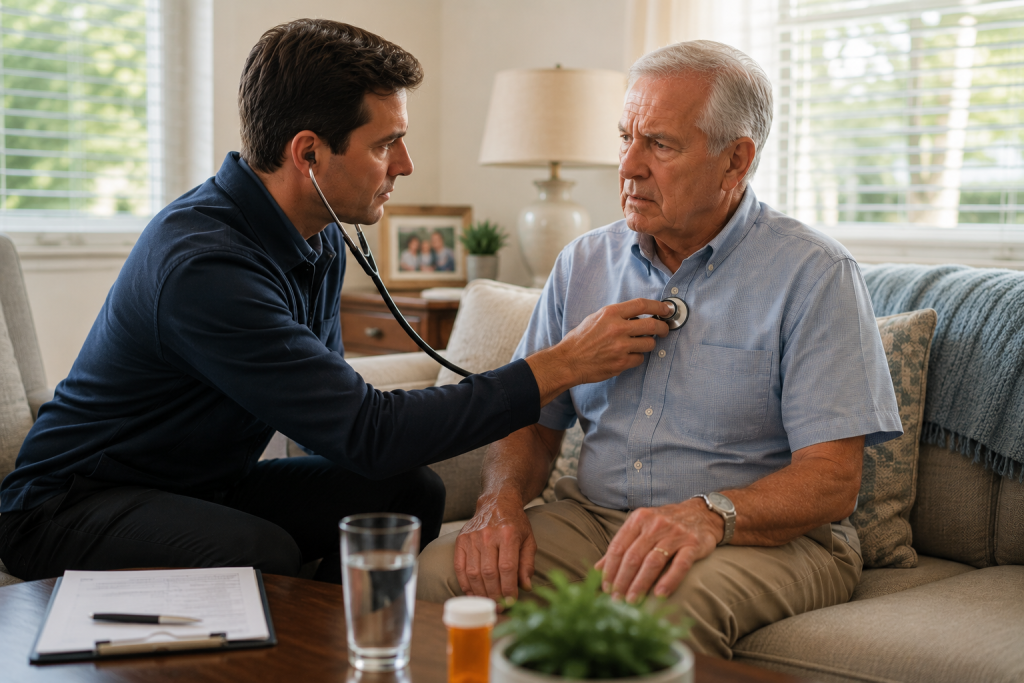
This is exactly what post-hospital mobile medical care is designed to address. Rather than waiting weeks for an outpatient appointment — or sending a recently discharged patient back to a crowded waiting room while still weak and vulnerable — mobile physicians come directly to the patient's home. They monitor recovery in real time, catch complications early, manage medications, and maintain the continuity of care that is so often lost in the gap between hospital and home.
In this article, we will walk through why the post-discharge period is so medically risky, what mobile medical care after a hospital stay actually looks like, who benefits most from it, and how Horizon Mobile Physicians' Transitional Care Management supports patients and families across South Florida through this critical window.
When a patient is discharged from the hospital, they are typically stable — but they are not fully recovered. They are leaving a highly monitored environment where vital signs are checked constantly, medications are managed by nursing staff, and any change in condition triggers an immediate clinical response. They are returning to an environment where none of those safeguards exist.
At the same time, newly discharged patients are navigating a complexity that would challenge even a medically trained person. They may be managing multiple new prescriptions, some of which interact with medications they were already taking. They have wound care instructions or physical limitations to manage. They are absorbing information about conditions they may not fully understand — and they are doing all of this while still exhausted and physically weakened from their hospitalization.
The result is a period of significant vulnerability that the traditional healthcare system is poorly designed to address. Most primary care practices cannot offer timely appointments to a freshly discharged patient. Emergency rooms are available — but returning to one is exactly what everyone is trying to avoid. The gap in the middle is where preventable complications happen.
Leading Causes of Preventable Hospital Readmissions
Each of these causes has something in common: they are far more detectable — and far more manageable — when a qualified physician is physically present in the patient's home, assessing their actual condition in their actual environment, rather than reviewing a chart in a clinic weeks later.
Post-hospital mobile medical care is not a telehealth call. It is not a nurse checking in by phone. It is a board-certified physician or advanced practice provider coming to your home — bringing clinical tools, diagnostic capability, and the medical authority to assess, treat, and adjust your care plan on the spot.
Horizon Mobile Physicians provides Transitional Care Management to patients recovering at home throughout Palm Beach County and South Florida. Our post-discharge visits bridge the gap between the hospital and the first outpatient appointment — and provide the ongoing monitoring that makes the difference between a smooth recovery and a preventable return to the emergency room.
Every patient's recovery is different, and every visit is tailored to the specific clinical situation. In general, post-hospital mobile medical visits include:
"Horizon Mobile Physician Services truly saved the day for my family when my son fell ill unexpectedly. Their prompt response and professional care brought much-needed relief right to our doorstep."
— Lois G., North Palm Beach, Florida
Our physicians are equipped with portable medical technology that enables a meaningful clinical encounter in the home — not a cursory check-in, but a real medical visit that produces real clinical decisions. When something needs to change — a medication adjustment, an additional test, a specialist referral — it happens that day, not after another waiting period.
In clinical terms, the structured process of managing a patient's transition from hospital to home is called Transitional Care Management, or TCM. It is a recognized and Medicare-covered service that acknowledges what research has repeatedly confirmed: that the post-discharge period requires active, coordinated medical management — not just discharge instructions and a follow-up appointment three weeks out.
Horizon Mobile Physicians' Transitional Care Management services follow established clinical protocols designed to reduce readmission risk, ensure medication safety, and maintain continuity of care during the critical window after discharge. This includes:
What Transitional Care Management Involves
For patients on Medicare, Transitional Care Management is a covered benefit — meaning that the cost of this structured post-hospital oversight is not an out-of-pocket burden. Horizon Mobile Physicians accepts Medicare and most major PPO plans, making this level of care accessible to the patients who need it most.
For families who want to understand more about coverage, our team can help clarify benefits and confirm coverage before the first visit. You can reach us at 561-817-8274 or through our online booking form.
While virtually any patient can benefit from having a physician visit their home after a hospital stay, certain groups face significantly elevated risk during the post-discharge period — and stand to gain the most from structured mobile medical follow-up.
Older adults are disproportionately affected by post-discharge complications. They are more likely to have multiple chronic conditions that interact with an acute illness. They are more likely to be on complex medication regimens. They are more likely to experience deconditioning — physical weakness from the hospitalization itself — that increases fall risk and slows recovery. And they are more likely to face logistical barriers to outpatient follow-up care that healthy, mobile adults simply don't encounter.
For seniors in particular, having a physician come to them is not merely convenient — it is often the difference between a recovery that proceeds safely and one that deteriorates undetected. Our mobile primary care services are specifically designed with the needs of older adults in mind, providing the kind of thorough, unhurried clinical attention that a brief office visit rarely allows.
Conditions like congestive heart failure, chronic obstructive pulmonary disease, diabetes, and chronic kidney disease are the most common drivers of hospital readmission — not because they cannot be managed, but because they require consistent monitoring and rapid response to early warning signs. A weight gain of two pounds in a heart failure patient can signal fluid retention that needs immediate attention. A blood glucose reading that trends upward over three days is a warning that needs to be acted on before it becomes a crisis.
Mobile physicians can perform these assessments in the home, on a schedule that makes clinical sense — not on the arbitrary timeline of the next available appointment.
Surgical recovery carries its own set of post-discharge risks: wound infection, deep vein thrombosis, medication side effects, and the challenges of managing pain and mobility at home. A mobile physician can assess a surgical wound in the patient's home, evaluate mobility and pain management, and catch early signs of complications that a family caregiver would not be trained to recognize.
Residents of assisted living facilities and senior communities often face a particularly difficult post-discharge situation. They return to a setting that provides personal care support but typically lacks the on-site medical expertise to monitor a recovering patient clinically. Horizon Mobile Physicians partners directly with assisted living facilities and senior communities throughout South Florida to provide on-site physician visits that reduce unnecessary emergency room transfers and keep residents recovering safely where they live.
Warning Signs That Require Immediate Medical Attention After Discharge
If you or a loved one experiences any of these symptoms, contact your medical provider immediately. For emergencies, call 911.
There is something uniquely valuable about a physician who has been inside a patient's home. It is not simply convenience — though that matters enormously for a recently discharged patient. It is the clinical information that the home environment itself provides.
A physician making a house call can see whether a patient's refrigerator actually contains appropriate food. They can see whether the medications are organized in a way that supports adherence — or whether there are three different pill bottles on the counter with no clear system for which to take when. They can observe how the patient moves through their own home, identify fall hazards that would never come up in an office visit, and assess the level of support available in the household in real time.
They can also have a more honest conversation. Patients in clinical settings often underreport symptoms, minimize difficulties, and present as more capable than they actually are — because they feel the social pressure of the medical encounter. In their own home, in a familiar and comfortable environment, patients are far more likely to describe what is actually happening.
A patient's home is a clinical setting. It tells a physician things that no chart, no questionnaire, and no waiting room ever could.
For post-discharge patients specifically, this environmental context is not a nice-to-have. It is clinically essential. The home is where the recovery is happening — and where the risks are real. Meeting patients there is not simply a service convenience. It is better medicine.
Effective post-discharge care does not happen in a vacuum. It requires communication — between the discharging hospital, the patient's primary care physician, any specialists involved in the case, the home care team, and the family. One of the most dangerous aspects of the post-discharge period is the fragmentation of information: each provider knows part of the picture but no one has the whole.
Horizon Mobile Physicians takes a coordinated approach to post-hospital care. Our physicians review discharge summaries, communicate with the patient's existing medical team, and ensure that the care being delivered at home is consistent with and complementary to the care provided in the hospital. We do not create a parallel track — we integrate into the patient's existing care structure and fill the gaps that the traditional system leaves open.
For patients who need additional support beyond medical care — help with personal care, medication reminders, meal preparation, or transportation — Horizon Mobile Physicians works in close partnership with Horizon Care Services, our affiliated home care organization, to provide a comprehensive support structure that covers both medical and daily living needs.
This coordination also extends to ongoing primary care following the acute post-discharge period. For many patients — particularly seniors with complex chronic conditions — the mobile physician relationship that begins with post-hospital care evolves into a long-term primary care arrangement that keeps them out of the hospital for years to come.
Post-discharge complications do not always develop on a convenient schedule. A patient who was stable in the morning can present a clinical concern by afternoon. This is why access to same-day mobile medical visits is such a critical component of post-hospital care.
Horizon Mobile Physicians offers same-day appointments for urgent concerns — providing a clinically appropriate alternative to the emergency room for patients whose situation requires prompt attention but not emergency-level intervention. For a recently discharged patient who develops a fever, notices increased wound drainage, or experiences a worrying change in symptoms, a same-day house call can provide the assessment and treatment needed without the stress, exposure risk, and cost of an ER visit.
Our team is available Monday through Friday from 8am to 10pm and Saturday through Sunday from 9am to 6pm, with 24/7 availability for urgent needs. For immediate assistance, call us at 561-817-8274.
Horizon Mobile Physicians provides post-discharge mobile medical care throughout Palm Beach County and the surrounding region. Our physicians travel to patients' homes, assisted living communities, and senior residences across our full service area, including:
Palm Beach | Palm Beach Gardens | West Palm Beach | Jupiter | Tequesta | Boca Raton | Delray Beach | Boynton Beach | Royal Palm Beach | Wellington | Lake Worth Beach | Stuart | Hobe Sound | Martin County | Saint Lucie County
Whether you are being discharged from Jupiter Medical Center, Palm Beach Gardens Medical Center, Boca Raton Regional Hospital, or any other South Florida facility, our team can typically schedule a post-discharge visit within the medically recommended window — ensuring that the transition from hospital to home is monitored from the very beginning.
Horizon Mobile Physicians provides post-discharge medical care throughout Palm Beach County and South Florida. Our board-certified physicians and advanced practice providers come directly to your home — to monitor your recovery, manage your medications, and catch complications before they become crises.
We accept Medicare, most major PPO plans, Medicare Advantage, and private pay. Same-day appointments are available for urgent needs.
Call us today or book an appointment online — and let us make sure your recovery is in the right hands.
Book a Post-Discharge Visit → Or call us directly: 561-817-8274
The material contained on this site is for informational purposes only and DOES NOT CONSTITUTE THE PROVIDING OF MEDICAL ADVICE, and is not intended to be a substitute for independent professional medical judgment, advice, diagnosis, or treatment. Always seek the advice of your physician or other qualified healthcare providers with any questions or concerns you may have regarding your health.
Kindly take a moment to complete the form and a member of our team will reach out to you as soon as possible.
If you're currently experiencing an emergency situation, it would be best to call 911.