Living with a chronic illness is not a single event. It is a daily reality — a continuous process of monitoring, managing, adjusting, and advocating for your own health across months and years, with a medical system that was largely designed for acute episodes rather than long-term conditions.
For the millions of Americans managing diabetes, heart disease, COPD, hypertension, arthritis, kidney disease, or any of the other conditions that qualify as chronic, the traditional model of care — scheduling an appointment, sitting in a waiting room, spending 15 minutes with a physician, repeating every few months — often falls short. It misses the in-between. It misses the daily fluctuations, the medication questions that arise at 8 p.m., the subtle symptom changes that don't rise to the level of an emergency room visit but absolutely warrant medical attention before they become one.
There is a better model. And for patients across Palm Beach County and South Florida, Horizon Mobile Physicians is delivering it — directly to the home, with the consistency, depth, and personal attention that managing chronic illness at home truly requires.
Chronic conditions account for the vast majority of healthcare spending in the United States, and they are the leading driver of preventable hospitalizations, emergency room visits, and long-term disability. Yet the structure of conventional outpatient care is fundamentally misaligned with what chronic disease management actually demands.
Consider what happens between appointments. A patient with congestive heart failure is discharged from the hospital with a new medication regimen, dietary instructions, and a follow-up scheduled for four weeks out. In that four-week window, their weight fluctuates, their ankles swell, they feel short of breath climbing stairs — and they have no clear line to a physician who knows their history and can assess whether these changes require intervention or adjustment. Many of these patients end up back in the emergency room within 30 days, not because their condition is untreatable, but because the gap in monitoring and access allowed a manageable issue to escalate into a crisis.
This pattern repeats across virtually every chronic condition. Diabetes patients whose blood sugar management drifts between appointments. COPD patients whose exacerbations begin subtly and could be addressed early if a physician saw them at home. Hypertension patients whose blood pressure readings at the clinic — taken in a clinical setting after a stressful commute — bear little resemblance to their actual daily readings.
The home is where chronic illness actually lives. It is where the real data exists: how a patient moves through their environment, what they eat, how their condition behaves across the full arc of the day, and what barriers stand between them and the lifestyle changes their condition requires. Mobile physician services that bring care into the home don't just add convenience — they fundamentally improve the quality and accuracy of chronic disease management.
At Horizon Mobile Physicians, our approach to chronic care management is built around continuity, clinical rigor, and the kind of patient-physician relationship that is genuinely difficult to build in a traditional office setting. Our board-certified physicians, advanced practice nurses, and physician assistants come to you — to your home, your assisted living community, or your senior residence — and deliver the full spectrum of medical care that managing a chronic condition requires.
This is not a wellness check. It is a comprehensive clinical encounter: thorough examination, diagnostic assessment, medication review and management, care plan evaluation, and the time to have the conversations that get compressed or skipped entirely in a 15-minute office visit.
Our mobile primary care services provide the ongoing foundation for chronic illness management at home — establishing a consistent care relationship with a physician who knows your history, monitors your trends over time, and responds to changes proactively rather than reactively. You can learn more about this service and what a visit includes on our mobile primary care page.
Our clinical team is experienced in the management of a wide range of chronic conditions, including but not limited to the following:
Effective diabetes management requires far more than a quarterly A1C check. It demands consistent monitoring of blood glucose trends, medication adjustment as the condition evolves, dietary guidance that accounts for real-life eating patterns, and close attention to the complications — peripheral neuropathy, kidney function, cardiovascular risk — that develop when glucose control is inconsistent over time.
Our mobile physicians manage diabetes in the home environment, where they can observe the actual factors that influence glucose control: the patient's daily routine, meal preparation habits, activity levels, and the real barriers that make adherence difficult. This context transforms the quality of the clinical conversation and the relevance of the care plan that follows from it.
Cardiovascular conditions require vigilant monitoring — weight, blood pressure, fluid retention, medication tolerance, and symptom progression all need consistent professional assessment. For patients with congestive heart failure in particular, the difference between a well-monitored patient and a readmitted one often comes down to whether a physician identified the early warning signs of decompensation before they became an emergency.
Our transitional care management services are specifically designed to address this risk window — the critical period after a cardiac hospitalization or acute event when the likelihood of readmission is highest and the need for close follow-up is greatest. Our transitional care management program brings a physician to the home within days of discharge, establishing the clinical oversight that prevents the revolving-door hospitalization cycle that so many cardiac patients and their families dread.
COPD exacerbations — the acute worsening of symptoms that drives many patients to the emergency room — are frequently preventable when caught early. A physician who sees a patient at home can detect changes in breathing pattern, oxygen saturation, and respiratory effort that a patient themselves may not fully register as warning signs. Early intervention — an adjustment to inhaler regimen, a short course of oral corticosteroids, or a change in activity modification — can abort an exacerbation before it escalates to a hospitalization.
For COPD patients in Palm Beach County, the climate adds its own challenges. Heat, humidity, and seasonal allergen fluctuations can trigger or worsen respiratory symptoms, and having a physician relationship that includes regular in-home monitoring means those triggers are identified and managed rather than endured.
High blood pressure is often called the silent killer — and for good reason. It produces few symptoms even as it steadily increases the risk of stroke, heart attack, and kidney failure. Managing it well requires accurate, consistent blood pressure monitoring and a physician who can interpret trends over time rather than reacting to a single elevated reading in a clinical setting.
In-home blood pressure monitoring, conducted in the patient's natural environment without the anxiety and physical stress of a clinic visit, provides a far more accurate picture of actual cardiovascular risk. Our mobile physicians incorporate home blood pressure assessment into every visit for hypertensive patients and adjust treatment plans based on real-world data rather than office snapshots.
Kidney disease requires careful management of diet, hydration, medications, and comorbid conditions — particularly diabetes and hypertension, which are the two leading causes of CKD. As kidney function declines, medication dosing must be carefully adjusted, and the risk of drug interactions increases significantly. Our physicians manage this complexity at home, coordinating with nephrologists and other specialists as needed to ensure that the care plan is coherent, current, and adapted to the patient's evolving kidney function.
For patients with severe arthritis, the irony of traditional medical care is particularly acute: the condition that most limits mobility is one that requires regular medical attention — and getting to that medical attention requires the mobility the condition is taking away. Our house call doctors eliminate this barrier entirely. We come to the patient, assess pain levels and functional limitations in the environment where they live, evaluate the effectiveness of current treatment, and adjust the approach based on what we actually observe rather than what a patient can communicate in a brief office visit.
Chronic neurological conditions — including Parkinson's disease, post-stroke sequelae, and dementia — present unique management challenges that are genuinely better addressed in the home environment. Observing how a Parkinson's patient moves through their own space, how a dementia patient navigates their daily routine, and what functional changes have occurred since the last visit provides clinical information that no office-based assessment can fully replicate.
For dementia patients specifically, the disruption and disorientation of a clinic visit can itself be a significant source of distress — one that affects the quality of the clinical encounter and the accuracy of the cognitive assessment. In-home visits eliminate this disruption and allow for a more accurate, compassionate evaluation of cognitive status and functional ability.
One of the most underappreciated aspects of in-home medical care is the clinical information that the home environment itself provides. When a mobile physician walks into a patient's home, they see things that no office visit can reveal:
Each of these observations informs better clinical decision-making. A physician who knows that a diabetic patient's diet recommendations are unrealistic given their actual food access can make more relevant, achievable recommendations. A physician who sees that a COPD patient's home has inadequate air filtration can address an environmental trigger that no amount of medication adjustment would resolve. The home is a clinical setting — one that provides context and information that dramatically improves the quality of chronic disease management.
One of the most measurable benefits of managing chronic illness at home with a mobile physician is the reduction in preventable hospitalizations and emergency room visits. The data on this is consistent: patients with chronic conditions who receive regular, proactive in-home medical care are hospitalized less frequently, spend fewer days in the hospital when they are admitted, and have significantly lower rates of 30-day readmission than those managed through traditional outpatient care alone.
The mechanism is straightforward. Regular in-home medical care allows physicians to identify and address the early warning signs of decompensation — the subtle clinical changes that precede a crisis — before they escalate to the point where emergency intervention is required. Medication adjustments, treatment plan modifications, and early intervention for developing complications are far less costly and far less disruptive than emergency care and hospitalization.
For patients who have recently been discharged from a hospital or rehabilitation facility, our transitional care management services provide the critical bridge between inpatient care and stable home-based management — addressing the period of highest readmission risk with the intensity of monitoring and support that period genuinely requires.
Even with the most proactive chronic care management, acute issues arise. A sudden change in symptoms, a new medication reaction, a wound that isn't healing as expected, a respiratory episode that needs immediate assessment — these situations require rapid access to a physician without the wait, the expense, and the exposure risk of an emergency room visit.
Horizon Mobile Physicians provides same-day visits for urgent medical needs that don't require emergency room care, bringing a physician to the patient's home when an issue demands prompt clinical attention. Our same-day visit service is available across Palm Beach County and is particularly valuable for chronic illness patients whose conditions can shift rapidly and whose medical complexity makes an emergency room visit especially disruptive.
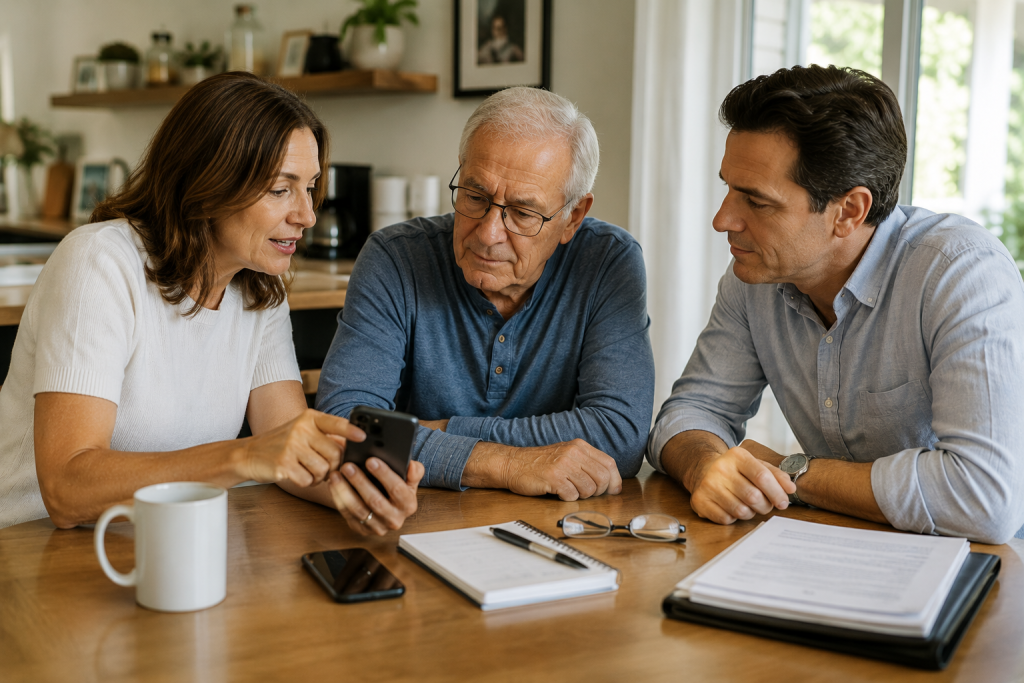
Managing a chronic condition well rarely falls to a single provider. Most patients with significant chronic illness have a care team: a primary care physician, one or more specialists, perhaps a physical therapist or nutritionist, a home health agency or personal care aide, and family members who play active roles in their day-to-day care. The quality of communication and coordination among these team members is one of the strongest predictors of outcomes in chronic disease management.
At Horizon Mobile Physicians, care coordination is built into our model. We communicate directly with specialists, facilitate referrals when needed, review and reconcile medication lists to prevent dangerous interactions, and maintain the clinical documentation that ensures continuity when care crosses settings. We also work closely with in-home care providers — including our sister company Horizon Care Services — to ensure that the medical and personal care dimensions of a patient's needs are aligned and mutually reinforcing.
This coordinated approach is particularly important for patients who are transitioning between care settings — from hospital to home, from rehabilitation facility to assisted living, or from one level of care to another. Our transitional care management program is specifically designed to manage these transitions with the clinical oversight and communication that prevents the gaps and errors that so often occur when patients move between settings without adequate coordination.
While in-home chronic care management offers benefits for a wide range of patients, certain groups are particularly well served by the mobile physician model:
Horizon Mobile Physicians provides in-home chronic disease management and comprehensive mobile physician services throughout Palm Beach County and surrounding areas. Our clinical team serves patients in Jupiter, Palm Beach Gardens, North Palm Beach, West Palm Beach, Palm Beach, Boca Raton, Delray Beach, Boynton Beach, Lake Worth Beach, Wellington, Royal Palm Beach, Tequesta, and throughout Martin County and Saint Lucie County.
We accept Medicare and most major insurance plans, and our care coordinators are experienced in navigating insurance questions to ensure that patients can access the care they need without unnecessary barriers. Whether you are managing a long-standing chronic condition, recovering from a recent hospitalization, or simply ready for a medical care model that works around your life rather than the other way around, our team is ready to help.
Chronic illness is not going to manage itself. But it doesn't have to be managed in a waiting room, with a rushed physician who sees you for 15 minutes every few months and knows little about how your condition actually behaves in your daily life. There is a better way — one that brings expert medical care to you, on your schedule, in the environment where your health is actually lived.
Horizon Mobile Physicians is ready to become the medical partner your chronic illness management has been missing. Our board-certified physicians, advanced practice nurses, and dedicated care coordinators are here to provide the consistent, comprehensive, home-based care that gives patients with chronic conditions their best chance at stability, independence, and quality of life.
Call us today at 561-817-8274 or book an appointment online to schedule your first in-home visit and take the first step toward better chronic illness management at home.
The material contained on this site is for informational purposes only and DOES NOT CONSTITUTE THE PROVIDING OF MEDICAL ADVICE, and is not intended to be a substitute for independent professional medical judgment, advice, diagnosis, or treatment. Always seek the advice of your physician or other qualified healthcare providers with any questions or concerns you may have regarding your health.
Kindly take a moment to complete the form and a member of our team will reach out to you as soon as possible.
If you're currently experiencing an emergency situation, it would be best to call 911.